
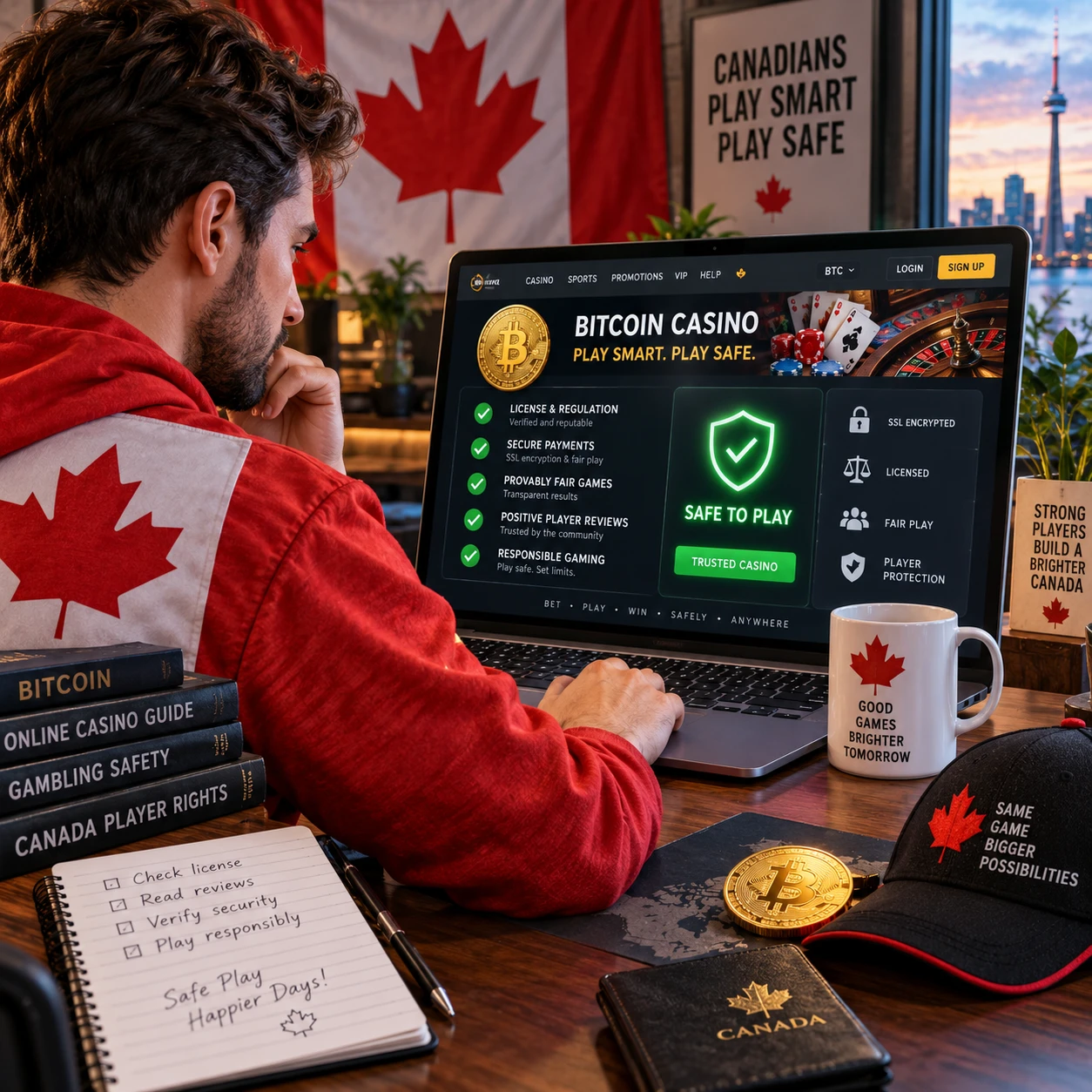
I've watched the crypto gambling scene in Canada shift from a niche curiosity into something close to mainstream over the past couple of years. Spend five minutes on any online gambling forum frequented by Canadians and you'll find dozens of fresh threads every week — which platforms take Bitcoin, which ones actually pay out fast, and, more worryingly, which ones vanished overnight with someone's deposit still sitting in their account. That last part is the catch, and it's a big one.
Canada doesn't have a single federal body policing crypto gambling the way the UK Gambling Commission oversees operators in Britain. Instead we get a patchwork: provincial regulators, offshore licensing bodies, and a fair amount of self-reporting from the casinos themselves. That gap is exactly why independent vetting matters so much right now. It's also why I put this checklist together — a practical way for Canadian players to separate genuinely trustworthy platforms from the flashy sites that look good on the surface but won't hold up once you start asking questions.
The appeal isn't complicated once you've actually used one. Deposits clear in minutes instead of days. Withdrawal fees are a fraction of what traditional e-wallets charge. And you don't have to hand your banking details to some site you've never heard of before this week. Add provably fair game mechanics into the mix — more on that shortly — and it's not hard to see why so many Canadian players have drifted from fiat-only platforms toward crypto-friendly ones.
But rapid growth always drags opportunists along with it. For every well-run Bitcoin casino with transparent operations, there seem to be two or three clones running copied templates, fake license badges, and withdrawal policies built to frustrate rather than pay out. Here's the uncomfortable part: the same features that make crypto casinos attractive — speed, pseudonymity, minimal friction — also make them easier to exploit if you're not paying attention.
This is where things get genuinely murky. The Alcohol and Gaming Commission of Ontario (AGCO) regulates online gambling within Ontario's borders, but most Bitcoin casinos operate from outside Canadian jurisdiction entirely — which puts them outside AGCO's direct reach for enforcement purposes. The Kahnawake Gaming Commission, based on Mohawk Territory in Quebec, has licensed online gambling operators for years now and remains one of the more established authorities Canadian players will run into. Outside of these two, plenty of platforms rely on licenses from Malta or Curacao instead.
None of this is illegal for Canadian players to use. But it does mean you're largely on your own for due diligence — there's no single Canadian regulator chasing down bad actors on your behalf. So that job falls to you.
Licensing is the first thing I check, and honestly, it should be the first thing you check too. A legitimate license doesn't guarantee a perfect experience — I wish it worked that way — but it does mean the operator went through some baseline vetting and answers to a regulatory body when disputes come up.
Here's a quick checklist for verifying licenses:
What a license doesn't guarantee: fast payouts, fair bonus terms, or good customer support. It's a floor, not a ceiling. Necessary, but not sufficient on its own — so don't stop there.
Provably fair systems use cryptographic hashing so both the casino and the player can verify, after the fact, that a game outcome wasn't manipulated. In practice, the casino generates a 'server seed' before the round starts, combines it with a 'client seed' you can influence, and publishes a hash of the result beforehand. Once the round ends, you run the seeds through an independent verification tool to confirm the outcome matches what was promised. That's the whole mechanism — simpler than it sounds once you've done it once.
If a site claims to be provably fair but doesn't let you access seed histories, doesn't explain its hashing method, or buries verification tools three menus deep — treat that as a red flag. Real platforms make this information easy to find, because it's their main selling point for trust. Hiding it kind of defeats the purpose, doesn't it?
Beyond provably fair tech, look for seals from independent auditors like eCOGRA or iTech Labs. These organizations test random number generators and payout percentages on a regular basis, and their certification means an outside party — not just the casino itself — has verified the games behave as advertised. A casino proudly displaying a current, verifiable audit seal is telling you something real. One with no auditor mentioned anywhere? That's asking you to take its fairness entirely on faith, and I'm not big on faith when there's money involved.
Technical security matters just as much as licensing. Check that the site uses SSL encryption (that padlock icon in your browser), ask whether crypto holdings sit in cold storage rather than hot wallets vulnerable to hacks, and confirm two-factor authentication is available for your account. Withdrawal transparency is another tell — reputable casinos publish clear processing times and limits rather than burying them in fine print you only discover after you've already tried to cash out.
Safety, though, isn't purely a technical question. Responsible gambling support matters just as much, especially for Canadian players navigating a space with limited formal oversight. Organizations such as the best bitcoin casinos resource hub, maintained by the Interprovincial Association on Addictions, offer harm-reduction tools and consumer-protection guidance that complement the technical checks I've outlined above. A platform that actively links to or supports these kinds of resources is signaling something important: it cares about player wellbeing, not just processing deposits as fast as possible.
If a platform checks all seven boxes, it's earned a serious look. If it's missing two or three, I'd think twice before depositing anything. Missing more than that? Walk away.
I've made a few of these mistakes myself early on, so I'll flag them honestly instead of pretending I nailed it from day one. The biggest one: ignoring withdrawal limits until it's too late. Some sites cap crypto withdrawals so low that cashing out a decent win takes weeks instead of days. Another is trusting bonus claims at face value without reading the wagering requirements — which can turn a '100% match bonus' into something nearly impossible to actually withdraw.
Skipping the terms and conditions entirely is shockingly common, even though that's exactly where most of the unpleasant surprises live. And finally, plenty of players pick an offshore site purely because it showed up first in a search, without spending five minutes checking which jurisdiction actually licenses it. Five minutes. That's really all it takes.
Finding the best Bitcoin casinos in Canada in 2026 really comes down to combining two things: technical due diligence and awareness of the player-protection resources available to you. Check the license. Verify the provably fair math. Confirm the security practices, and don't overlook the responsible gambling tools a platform offers.
None of these checks take more than a few minutes individually, but together they form a pretty reliable filter against the scams and shortcuts that still plague this space. Before you deposit any crypto funds this year, run through the checklist above — it's saved me from a handful of bad decisions, and I suspect it'll do the same for you.